Morong and Bagac, Bataan: A Beach Property Guide
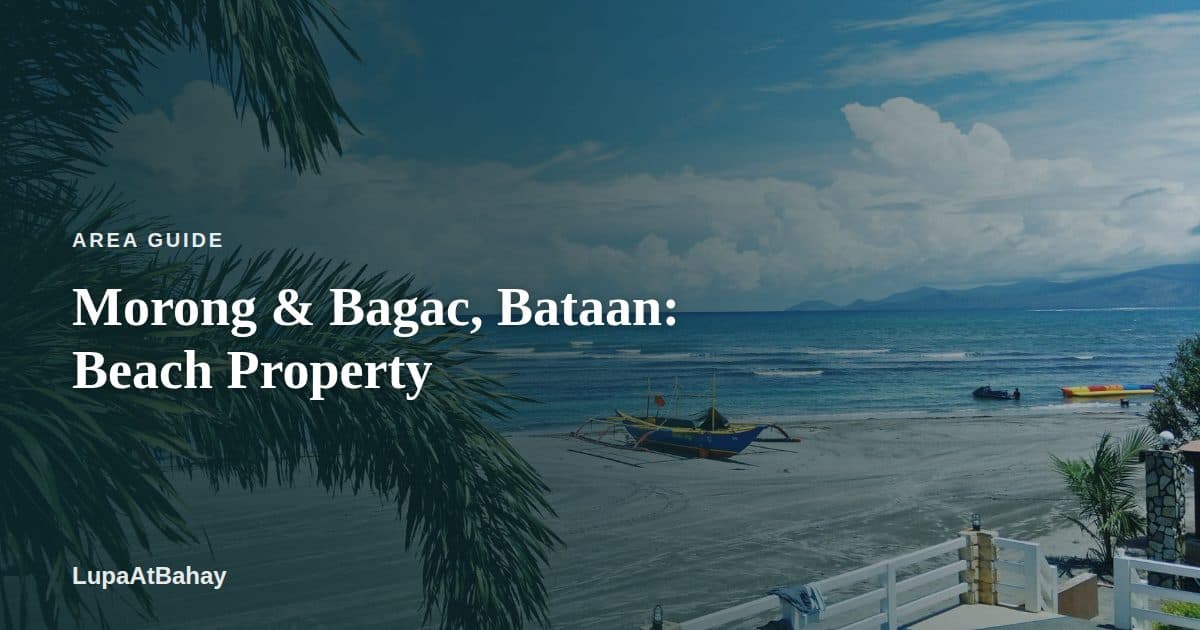
Photo: Sherielyn Nobleza, Pexels
This guide is general information, not legal, tax or financial advice. Rules, rates and fees change, so confirm the details with the relevant agency, your lender or a licensed professional before you decide.
Bataan’s west coast — Morong and Bagac — is the province’s beach frontier: a string of coastal barangays facing the South China Sea, popular with weekend visitors from Manila and increasingly with buyers looking for a beach property without Zambales-level prices. It’s a different kind of market than Bataan’s industrial east coast, and it comes with its own specific due-diligence checklist.
Morong: closer, more developed
Morong sits nearer the province’s interior road network and has the area’s more established tourism infrastructure — resorts, beach clubs, and a longer track record of weekend and holiday visitors. It’s generally the easier of the two towns to reach and the more built-up of the pair, with a wider range of existing beachfront and near-beach properties already developed.
Bagac: quieter, and the gateway to Las Casas Filipinas de Acuzar
Bagac is further along the coast and has a distinct draw: Las Casas Filipinas de Acuzar, a large heritage resort built around restored and replicated Spanish-colonial-era buildings, which has become a genuine tourism anchor for the whole area, not just a single hotel. Bagac otherwise reads as quieter and more rural than Morong, with beach lots more likely to be raw or lightly developed rather than resort-adjacent.
What draws buyers here
- Beachfront and near-beach lots at prices well below comparable coastline in more built-up tourist areas.
- Weekend/vacation-home demand from Manila, within a manageable drive.
- Tourism-driven rental potential, particularly near established draws like Las Casas.
- A genuinely undeveloped, quieter coastline compared with more saturated beach destinations.
What to check before buying here specifically
Beach and coastal land carries the highest concentration of title and classification risk in this market, for reasons that apply specifically to this kind of geography:
- Foreshore and easement zones. A strip of land along the shoreline is a mandatory public easement and generally can’t be privately owned, regardless of what a title or tax declaration claims. See our zoning and land classification guide.
- Rights-only and tax-declared lots are common in less-developed coastal barangays — confirm whether a lot is actually titled before assuming financing is possible. See our titled vs. rights-only lots guide.
- Storm and typhoon exposure. West-facing coastal property is directly exposed to South China Sea weather systems — ask about historical storm damage and any local building or setback requirements before designing a structure.
- Road access to a specific lot can be inconsistent along less-developed stretches of coast — confirm legal, physical access exists (not just a path across a neighbor’s land) before buying.
Getting there
Both towns are reachable from Manila via the Roman Superhighway through Bataan, generally a few hours’ drive depending on the exact route and traffic, making a weekend trip realistic rather than a full expedition, even for a buyer who ultimately plans to live and work elsewhere and visit on weekends and holidays. The Bataan–Cavite Interlink Bridge, discussed in our Central Luzon investment guide, could meaningfully shorten the trip from the south once complete — treat that as long-term upside, not a current travel time.
Infrastructure and services: still developing
This coast is genuinely less built-up than Subic or Zambales’ more established towns, and that shows in day-to-day services: fewer hospitals and specialist clinics nearby (Balanga, Bataan’s provincial capital, and ultimately Manila cover more serious medical needs), a more limited selection of schools, and internet and utility infrastructure that can be less consistent the further you get from the town centers and existing resorts. None of this rules out living here full-time — plenty of people do — but it’s a real trade-off against the lower price and quieter setting, worth weighing honestly against your own needs rather than assuming resort-town infrastructure automatically comes with resort-town scenery.
Rental and tourism potential
Las Casas’ pull as a heritage tourism destination has genuinely lifted interest in short-term rentals and small beachfront guesthouses along this coast, especially around holiday weekends and the peak dry season. That said, this remains a much smaller, more seasonal tourism market than Zambales’ more established Subic area — occupancy is real but uneven across the year, and a buyer planning a rental income strategy here should model for meaningful vacancy in the off months, not steady year-round bookings. Local zoning and HOA rules (where a subdivision exists at all) should be checked directly, since not every barangay permits short-term rental operations the same way.
Compare this against a more consistent rental market like Subic Bay, which draws steadier demand from Freeport employment rather than tourism alone, if predictable rental income matters more to you than the lower entry price this coast offers.
Financing reality check
Because titled inventory is less common here than in more developed markets like Subic, expect more transactions to be cash purchases or developer/seller financing rather than Pag-IBIG or bank loans — see our financing comparison guide for how that changes the numbers.
Comparing Morong and Bagac side by side
| Morong | Bagac | |
|---|---|---|
| Development level | More built-up, more existing resorts | Quieter, more raw land |
| Access | Generally easier, closer to the interior road network | Further along the coast |
| Tourism anchor | Established beach club/resort scene | Las Casas Filipinas de Acuzar |
| Typical lot condition | More often resort-adjacent, developed | More often raw or lightly developed |
Who this market suits
- Buyers specifically wanting beachfront or near-beach land at a lower entry price than Zambales.
- Vacation-home or eventual rental-property buyers targeting the Las Casas-driven tourism draw.
- Buyers comfortable doing extra title and classification due diligence, and possibly buying rights-only land with a plan to title it later.
- Less suited to buyers who need bank/Pag-IBIG financing on day one, or want a fully built, move-in-ready home immediately.
A short visit before committing goes a long way here, since so much of this coast’s character varies block by block rather than town by town — a lot two properties apart can feel like a different market entirely.
Browse what’s available
See current Morong and Bagac listings, or the wider Bataan province, and always ask a seller directly for the title status and land classification before scheduling a viewing.
If you’re weighing Morong against Bagac, create a free account to save your favorites from both towns and compare them side by side instead of relying on memory.
Frequently asked questions
Are beach lots in Morong and Bagac titled?
It varies. Rights-only and tax-declared lots are more common in less-developed coastal barangays than in a market like Subic. Always confirm a specific lot's title status before assuming it can be financed with a bank or Pag-IBIG loan.
What is Las Casas Filipinas de Acuzar?
A large heritage resort in Bagac built around restored and replicated Spanish-colonial-era buildings, which has become a major tourism anchor for the western Bataan coast.
Can I own beachfront land right up to the shoreline in the Philippines?
No. A strip of land along the shoreline is a mandatory public foreshore easement and generally cannot be privately owned. Confirm the boundaries of any coastal lot before buying, since some listed "beachfront" parcels may include easement area.
How far is Morong/Bagac from Manila?
A few hours' drive via the Roman Superhighway through Bataan, depending on the exact route and traffic, making it a realistic weekend trip.