Living in Subic Bay and SBMA: A Newcomer's Guide
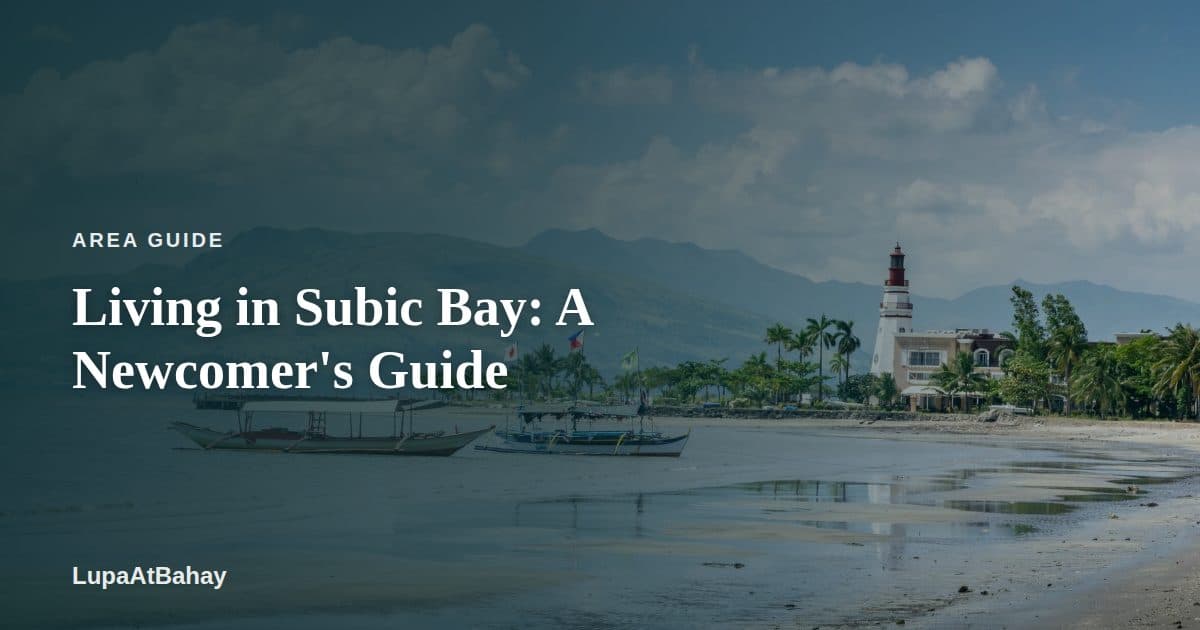
Photo: Nate Hovee, Pexels
This guide is general information, not legal, tax or financial advice. Rules, rates and fees change, so confirm the details with the relevant agency, your lender or a licensed professional before you decide.
Subic Bay draws a specific kind of buyer: returning OFWs, retirees (Filipino and foreign), and people working for one of the Freeport Zone’s many logistics, aviation, manufacturing, and tourism employers. It has a different rhythm than a typical Philippine provincial town, shaped by decades as a US naval base before its 1992 conversion into a Freeport under the Subic Bay Metropolitan Authority (SBMA). Here’s what living there day to day actually looks like.
The lay of the land: Freeport vs. Olongapo
“Subic” usually refers to two connected but distinct areas. The Subic Bay Freeport Zone itself is the former naval base — planned, gated in parts, with wide roads, forested hills, waterfront, and most of the area’s offices, factories, hotels, and higher-end subdivisions. Olongapo City sits just outside the Freeport gates and is the everyday city: markets, most public schools, the bulk of affordable housing, and the area’s commercial downtown. Many residents live in one and work or shop in the other daily.
Jobs and the local economy
The Freeport Zone hosts a genuinely diverse employer base — ship repair and logistics firms taking advantage of the deep-water port, light manufacturing, BPO offices, aviation-adjacent business at Subic Bay International Airport, and a large tourism sector (resorts, diving, adventure parks, duty-free shopping). This gives Subic steadier year-round employment than a purely tourism-driven town, and a labor market used to both Filipino and foreign management.
Housing
Subic has the widest choice of housing types in Zambales province: gated subdivisions and townhouses inside the Freeport (often favored by expats and returning OFWs for security and amenities), standalone houses and older subdivisions in Olongapo at a range of price points, and a smaller but growing condo/vertical segment. It’s also the province’s most financing-ready market — the widest selection of titled, bank-and-Pag-IBIG-eligible inventory. See our Subic vs. Iba vs. Botolan comparison for how it stacks up against the rest of the province.
Schools
Families relocating to Subic have real options: several private and international-curriculum schools operate in and around the Freeport, alongside Olongapo’s public school system. Families planning ahead should research specific school admissions, curricula (some following a US or international system given the area’s history) and tuition directly, since options and quality vary by school, not just by neighborhood.
Healthcare
Subic and Olongapo have hospitals and clinics covering routine and moderately serious care; for specialized or major procedures, many residents still travel to Metro Manila (roughly 2–3 hours by expressway via SCTEX/NLEX depending on traffic) or Clark/Angeles, which has a larger concentration of specialist care. This is worth weighing for retirees or anyone with ongoing medical needs.
Getting around
- Local transport: jeepneys and tricycles cover Olongapo and the immediate area; a car is the practical choice for daily life inside the wider, more spread-out Freeport Zone.
- To Manila and beyond: SCTEX connects to NLEX and onward to Metro Manila and Clark; bus lines run this route directly, and it’s a manageable day trip.
- Subic Bay International Airport handles limited domestic and some charter/cargo traffic — most international travel still routes through Clark or Manila.
Cost of living and lifestyle
Subic sits at a premium to the rest of Zambales — you’re paying for infrastructure, security, and amenities that a smaller coastal town doesn’t have — but it’s still generally more affordable than Metro Manila or comparable Clark/Angeles neighborhoods. The lifestyle draw is real: beaches, diving and marine sanctuaries, forested hiking trails within the former base’s grounds, and a genuinely international, multicultural community built up over decades.
What day-to-day life actually costs
Groceries and dining split roughly along the same lines as housing: Freeport-area malls, hotels and restaurants sit at a premium reflecting the tourism and expat customer base, while Olongapo’s public markets, carinderias, and local shops run closer to typical provincial prices. Many residents mix both — market shopping for everyday groceries, Freeport dining for special occasions — rather than living entirely in one price tier.
Utilities and internet are generally reliable given the area’s built-up infrastructure, with fiber internet available in most established subdivisions, a real consideration for anyone working remotely or running a business from home. This is one of Subic’s practical advantages over a more rural stretch of coastline further north in the province.
Safety and community
The Freeport Zone’s gated layout, controlled entry points, and dedicated security presence are a large part of its draw for families and retirees, and Olongapo functions as an ordinary Philippine city with its own established, walkable neighborhoods. The area’s decades as a joint Filipino-American community (predating the 1992 base conversion) also mean an unusually international social fabric for a provincial city this size, with long-running expat and returnee networks that make settling in easier than in a town without that history.
Weekend and outdoor life
Beyond the working week, Subic’s outdoor draw is a real part of why people stay: diving and snorkeling in the bay’s marine sanctuaries, jungle trails and zip lines within the former base grounds, and duty-free shopping alongside more conventional mall retail. It’s close enough to Zambales’ wider beach coastline and to Clark/Pampanga for a day trip either direction, which gives residents more weekend variety than a more isolated coastal town would.
Who Subic actually suits
- Returning OFWs and retirees wanting security, amenities, and an established expat/returnee community — see our OFW and foreign buyer guide for the financing and eligibility differences that apply to this group.
- Professionals working for a Freeport-based employer, or commuting occasionally to Clark or Manila.
- Families prioritizing school choice and healthcare access over the absolute lowest price in the province.
- Buyers who want financing-ready, titled inventory rather than raw land requiring more legwork.
If the priority is the lowest cost per hectare or a quieter, more rural setting instead, Iba or Botolan further north are worth comparing — see our full Zambales area comparison.
See what’s currently available
Whatever brings you to Subic — a job at the Freeport, retirement, or simply the lifestyle — spending a weekend actually walking both the Freeport side and Olongapo before committing to a specific subdivision is worth the trip; the two halves of the area feel genuinely different day to day. Browse current Subic listings, or the wider Zambales province, and message agents directly about Freeport vs. Olongapo trade-offs for your specific situation.
Comparing Freeport listings against Olongapo ones over several visits? Create a free account to save the ones you like to your favorites, so you’re not screenshotting listings or hunting through browser history to find them again.
Frequently asked questions
What's the difference between Subic Bay Freeport Zone and Olongapo City?
The Freeport Zone is the former US naval base, now a planned economic zone with most offices, factories, hotels and higher-end subdivisions. Olongapo City is the adjacent everyday city with markets, most public schools and more affordable housing. Many residents use both areas daily.
Is Subic Bay a good place for expats and retirees?
Many find it appealing for its security, amenities, established international community, and range of housing options, though it costs more than other parts of Zambales. Healthcare for major or specialized procedures often still means traveling to Clark or Metro Manila.
How far is Subic Bay from Manila?
Roughly a 2-3 hour drive via SCTEX and NLEX, depending on traffic, with direct bus service available along the same route.
Is Subic more expensive than the rest of Zambales?
Generally yes -- Subic has the province's highest property prices, driven by Freeport employment, infrastructure and amenities, though it's still typically more affordable than Metro Manila or comparable Clark-area neighborhoods.