House and Lot for Sale in Tarlac: What to Check Before You Buy
Photo: Thirdman, Pexels
This guide is general information, not legal, tax or financial advice. Rules, rates and fees change, so confirm the details with the relevant agency, your lender or a licensed professional before you decide.
A house and lot in Tarlac can look like good value. Prices are often lower than in Pampanga, and the SCTEX, TPLEX and CLLEX expressways all pass through the province. But two listings a few kilometers apart can be a secure purchase in one case and an expensive problem in the other, depending on the title, the land classification, and the road and utilities around the lot. The paperwork matters more than the photos.
This guide covers what to verify before you reserve a unit, pay a deposit or sign anything. It’s written for buyers in the province and for OFWs buying from abroad, who can’t easily visit the Registry of Deeds themselves and need to know exactly what to ask for.
The checklist at a glance
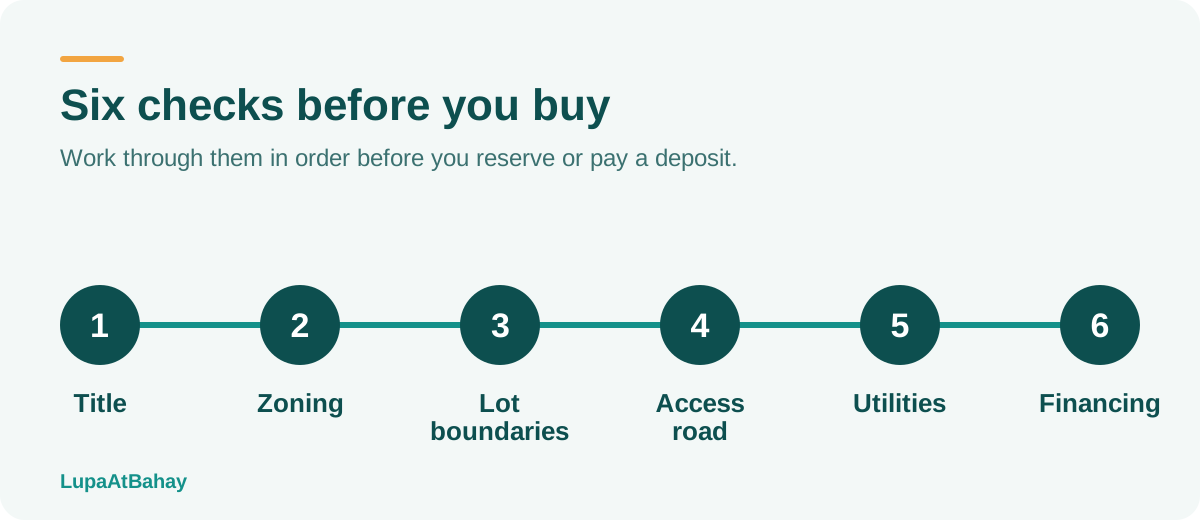
Before you commit to a Tarlac lot or house, confirm all six points. Each one has its own section below.
- Title: the seller is the registered owner (or an authorized heir or representative), the title is clean, and the real property tax is paid.
- Zoning and land classification: the lot is private, alienable land, and a house is allowed on it.
- Lot boundaries: the land on the ground matches the technical description on the title.
- Access road: the lot can be reached by a legal right of way, all year round, including in the rainy season.
- Utilities: water and power are available, or you know exactly what a connection will cost.
- Financing: a Pag-IBIG or bank loan is possible for this specific title, or any installment terms are written into a signed contract.

1. Check the title before anything else
A house and lot is only as secure as the land under it. Ask the seller for the title number and the owner’s name, then compare them with a Certified True Copy (CTC) of the title from the Registry of Deeds covering the lot’s location. Our titled vs. rights-only lots guide walks through each step. At a minimum, confirm that:
- the registered owner on the title is the person selling, or a documented heir or authorized representative;
- the lot area and technical description match the tax declaration and the lot you’re viewing;
- every annotation on the back of the title is explained, including any mortgage, adverse claim or pending case;
- the real property tax is paid up, confirmed with the municipal or city Treasurer.
A house built on a tax declaration alone is a different product. It can’t be financed through Pag-IBIG or a bank, and it carries the risks described in that guide.

2. Confirm zoning and land classification
Large parts of Tarlac are farmland, and agricultural land can carry extra rules. Three checks are worth making before you pay:
- Land classification. Ask for a DENR certification that the lot is alienable and disposable (A&D). Forest, protected or public land can’t be sold as private property, whatever the paperwork says.
- Agrarian reform coverage. Land awarded under agrarian reform, with a CLOA or Emancipation Patent, has restrictions on sale and transfer. Ask the Department of Agrarian Reform (DAR) office to confirm the status of the specific parcel.
- Zoning. Confirm with the municipal or city planning office that a house is allowed on the lot. Our zoning and land classification guide explains which office answers which question.

3. Walk the lot boundaries
A title describes the lot in technical terms: bearings and distances from fixed reference points. The land on the ground has to match that description, and in rural Tarlac the corners are often unmarked or hard to find. Ask for:
- the approved survey plan or technical description, matched to the title number;
- a relocation survey by a licensed geodetic engineer before you pay, if the corners can’t be pointed out clearly;
- the agreement of the neighbors on each side, especially where the lot borders another farm, a creek or a road easement;
- an area that matches across the title, the tax declaration and the price you’re being asked to pay.
If the seller can’t show you each corner, or the area on the papers differs from what you’re paying for, stop until a surveyor has settled it. Boundary disputes are common in farmland and expensive to fix after you’ve built.


4. Check the access road and utilities
A lot you can’t reach in the rainy season is hard to build on and harder to sell. Check the road and the basic utilities before you look at the house itself.
- Access. Is the road public (owned by the LGU) or private? Does it stay passable when it rains? If the lot is landlocked, it needs a recorded right of way or easement to a public road. Get that in writing, not as a verbal promise.
- Water. Is there a water district or community connection, or a permitted well? Ask who runs the supply and what it costs to connect to it.
- Power. Which electric cooperative or utility serves the street? Is there a connection already, and if not, how far is the nearest line and who pays to extend it?
- Flooding. Ask the barangay and the neighbors about flooding in the last few years, and ask about this parcel specifically. A town can be safe while one low-lying lot is not.
5. Know which part of Tarlac you’re buying in
“Tarlac” covers very different situations, so ask which town the lot is actually in.
- Tarlac City is the provincial center, with the most established schools, hospitals and services. It suits buyers who want a home that works from day one. Our Tarlac City and New Clark City living guide covers daily life in more detail.
- Capas and Bamban are where New Clark City’s footprint sits. The development is planned and still under construction, not finished. Price a purchase on what exists today, not on a masterplan rendering.
- Outlying municipalities may offer a lower entry price, but they need closer checks on road access, water and power, and flood history. Parts of the province near Mt. Pinatubo were affected by lahar after the 1991 eruption, so ask about the specific parcel.
6. Work out the real total cost
The asking price is rarely the full amount you’ll pay. Budget for each of these, and put in writing who pays which one:
- Transfer and registration costs, such as the transfer tax, documentary stamp tax and Registry of Deeds fees. The transfer taxes and fees guide lists them one by one. Rates and bases change, so confirm the current figures with the BIR and the Registry of Deeds.
- The reservation fee, and whether it’s refundable if the title check fails.
- The real property tax for the year, and any arrears from earlier years.
- Monthly association dues, if the house is in a subdivision.
- A relocation survey by a geodetic engineer, if the boundaries on the ground aren’t clear.
- The cost of connecting water and power, if the lot isn’t already served.
A worked example: what a loan does to the monthly payment
These figures are illustrative only. They aren’t a Tarlac price or a current loan rate, but they show how the numbers fit together. Say you finance ₱1,500,000 at an illustrative 6% a year over 20 years:
| Item | Illustrative figure |
|---|---|
| Loan amount | ₱1,500,000 |
| Interest rate | 6% a year (example only) |
| Term | 20 years, 240 monthly payments |
| Monthly payment | about ₱10,750 |
| Total repaid over 240 months | about ₱2.58 million, so roughly ₱1.08 million is interest |
The point of the example is the gap between the loan and the total repaid. Try your own rate and term in the home loan calculator before you decide how much to borrow.

7. Check financing for this specific title
Pag-IBIG and bank housing loans need a titled property as collateral, so a financed purchase depends on the title check in step 1. Ask the lender early whether this lot qualifies. A lender may appraise the property and turn down a lot that is hard to value or reachable only by a narrow road. Our Pag-IBIG housing loan guide covers the property-side documents. Lending rules and rates change, so confirm current terms with the lender directly.
If the lot is rights-only, expect to pay cash or arrange a direct installment with the seller. Get any installment terms in a signed, notarized contract, and pay only against official receipts.
8. Questions to ask before you visit
- Is the lot titled, and may I see the owner’s duplicate title and the current tax declaration?
- Is the title still in the seller’s name, or is there an estate or a chain of deeds I should see?
- Are the lot corners marked, and is there a survey plan I can compare with the title?
- Is there a legal right of way, and can I reach the lot by road in the rainy season?
- Who supplies water and power, and what does a connection cost?
- Has this specific lot flooded in recent years?
- Is there a building permit, and if the house is finished, a certificate of occupancy?
- Is the reservation fee refundable, and what happens if the title check doesn’t clear?
Ready to send an inquiry?
A house and lot in Tarlac can be a sound purchase when the title is clean, the land is classified for private use, the lot can be reached and connected, and the monthly payment works on your income. Check those first, then compare the rest.
To start, browse current Tarlac listings, or look at lots for sale and homes for sale across Central Luzon. When you find a property you’re considering, send an inquiry to its agent from the listing page, and ask them the questions above before you reserve or pay anything. You can also create a free account to save listings and compare them side by side.
Frequently asked questions
Is it safe to buy a house and lot in Tarlac?
It can be, when the title is verified against a Certified True Copy from the Registry of Deeds, the land is classified as alienable and disposable, the boundaries match the survey, and the real property tax is paid. Those checks matter more than the town or the price.
Can I get a Pag-IBIG loan for a rights-only lot in Tarlac?
Generally no. Pag-IBIG and banks need a titled property so they can take a mortgage on it, so rights-only lots are usually bought in cash or on a direct installment arrangement with the seller.
Is land in Tarlac cheaper than in Pampanga?
It is often less expensive, but prices depend on the town, the lot and its title status. Compare current listings for the specific area you’re considering rather than relying on a general rule.
How do I find out if a Tarlac lot is covered by agrarian reform?
Check the title and tax records for a CLOA or Emancipation Patent, then ask the Department of Agrarian Reform office to confirm the parcel’s status. Awarded land has restrictions on sale and transfer.